
Bonuses
FAQ
What is HellCase and how does it work?
HellCase is a third-party CS:GO case opening platform where players can purchase virtual cases containing random skins. It works by connecting to your Steam account, allowing you to open cases and withdraw won skins directly to your game inventory.
Is HellCase a legitimate and safe platform?
HellCase has operated since 2015 with millions of processed withdrawals. It uses standard security practices including SSL encryption and Steam's authentication system. While no platform is without risk, HellCase has maintained a reasonable reputation for processing legitimate withdrawals.
How do I start using HellCase?
Create an account through Steam authentication, set your Steam inventory to public, make a deposit using your preferred payment method, browse available cases, make your selection, and open cases. Won skins can be withdrawn directly to your Steam inventory.
What types of cases are available on HellCase?
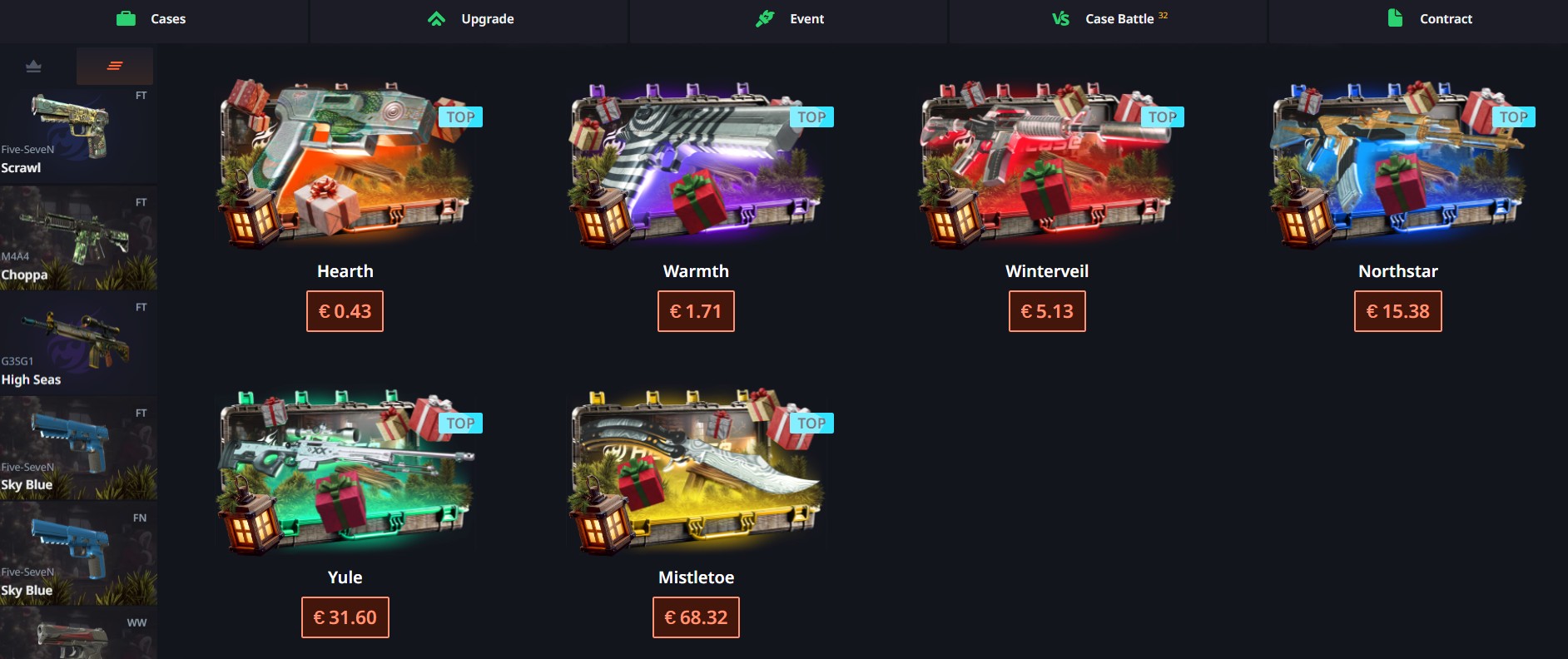
HellCase offers standard cases similar to official CS:GO ones, premium cases with higher-value items, budget options for newer players, weapon-specific collections focusing on particular guns, and themed seasonal cases with limited availability.
What is the HellCase Provably Fair system?
The Provably Fair system uses cryptographic methods to ensure random, unmanipulated case results. It generates server and client seeds that combine to determine outcomes, allowing users to verify after opening that results weren't predetermined or altered.
What payment methods does HellCase accept?
HellCase accepts credit/debit cards, cryptocurrencies (Bitcoin, Ethereum, Litecoin), digital wallets (G2A Pay, Skrill), bank transfers in select regions, and skin deposits where you trade existing CS:GO items for site credit.
What happens if an item is out of stock on HellCase?
When items are out of stock, HellCase typically offers several options: waiting for restock (usually 24-72 hours), selecting an alternative item of equal value, accepting multiple lower-value items, or receiving credit back to your account.
How do HellCase odds compare to official CS:GO cases?
HellCase typically offers 15-20% better odds for rare items than official CS:GO cases. The platform displays exact drop percentages for each item, providing more transparency than Steam's system.
Can I sell skins I get from HellCase?
Yes, once withdrawn to your Steam inventory, skins function like any other CS:GO item. You can use them in-game, trade them with other players, or sell them on the Steam marketplace according to Steam's standard rules.
What do users say about HellCase?
User reviews show mixed experiences. Positive reviews highlight better odds than Steam cases, variety of options, and successful withdrawals. Negative feedback typically focuses on occasional stock issues and the inherent risk of case opening.
Why choose HellCase?
HellCase offers better odds than Steam cases, doesn't require separate keys, provides greater case variety, supports multiple games, runs regular promotions, displays transparent odds, and features specialty cases unavailable elsewhere.
What are the prices and discounts on HellCase?
Cases range from $0.50 to $200+. Budget cases cost $1-5, mid-tier $5-20, and premium cases $20-100+. Regular discounts include first-deposit bonuses (typically +10%), daily free cases, and promotional codes offering 5-15% extra credit.
Are payments secure on HellCase?
HellCase uses industry-standard security including SSL encryption and established payment processors. Card details are processed by third-party providers rather than stored on HellCase servers, following standard e-commerce security practices.
How do I register and link my Steam account?
Click the "Sign In Through Steam" button, log in to your Steam account when prompted, authorize the connection permissions, ensure your Steam inventory is set to public, and verify your email address to complete registration.
Which games are featured on HellCase?
HellCase primarily focuses on CS:GO/CS2 with the largest selection of cases. The platform also supports Dota 2, Team Fortress 2, and Rust with smaller but growing collections of cases for these games.